
See It Before You Build It: AI’s Role in Smarter Event Planning
Most event issues don’t happen on-site. They happen much earlier, in the gap between what was intended and what was actually understood.
A stakeholder hears one thing and pictures something completely different. A vendor interprets direction based on their own assumptions. A concept gets diluted through rounds of feedback until it barely resembles the original idea. By the time you’re on-site, you’re no longer executing a clear vision. You’re managing the consequences of misalignment.
That’s the real breakdown in event planning. Not logistics. Not execution. Translation.
AI is changing that.
For years, planners have relied on decks, reference images, and long explanations to communicate ideas. And even then, there’s always been a level of interpretation involved. You say “modern and elevated,” someone else hears “minimal and cold.” You say “high energy,” someone else designs something chaotic. Everyone is working from the same words, but not the same vision.
AI removes that guesswork.
Instead of asking people to imagine what you mean, you can show them. Visual concepts that used to take days or even weeks to pull together can now be created in minutes. Not final designs, but clear, directional visuals that anchor the conversation and give everyone something real to react to.
Mood boards start to feel like actual environments instead of loose inspiration. Stage designs begin to reflect scale, lighting, and energy. Branded moments feel tangible, not abstract. You’re no longer translating ideas through explanation alone. You’re putting the experience in front of people before it’s ever built.
That shift changes everything.
When stakeholders can see what you’re proposing, feedback becomes more specific and more useful. Instead of vague reactions like “this doesn’t feel right,” you get actionable input that actually moves the concept forward. Internal alignment happens faster because everyone is reacting to the same thing, not their own interpretation of it.
The same is true for vendors. When your RFP includes clear visual direction, you’re no longer asking them to fill in the gaps. You’re asking them to execute against a defined vision. That leads to stronger proposals, more accurate pricing, and a much easier vetting process. You can quickly identify which partners understand the direction, which ones can elevate it, and which ones are missing the mark entirely.
It also changes how you pitch.
One of the biggest challenges in event planning has always been getting buy-in. Not because the idea isn’t strong, but because it’s hard for others to fully picture it. AI closes that gap. Instead of walking stakeholders through a concept and hoping it clicks, you’re giving them something they can see, react to, and engage with immediately.
That level of clarity builds confidence. And confidence drives faster decisions.
Example: Keynote Vision for the Signia Dream Ballroom
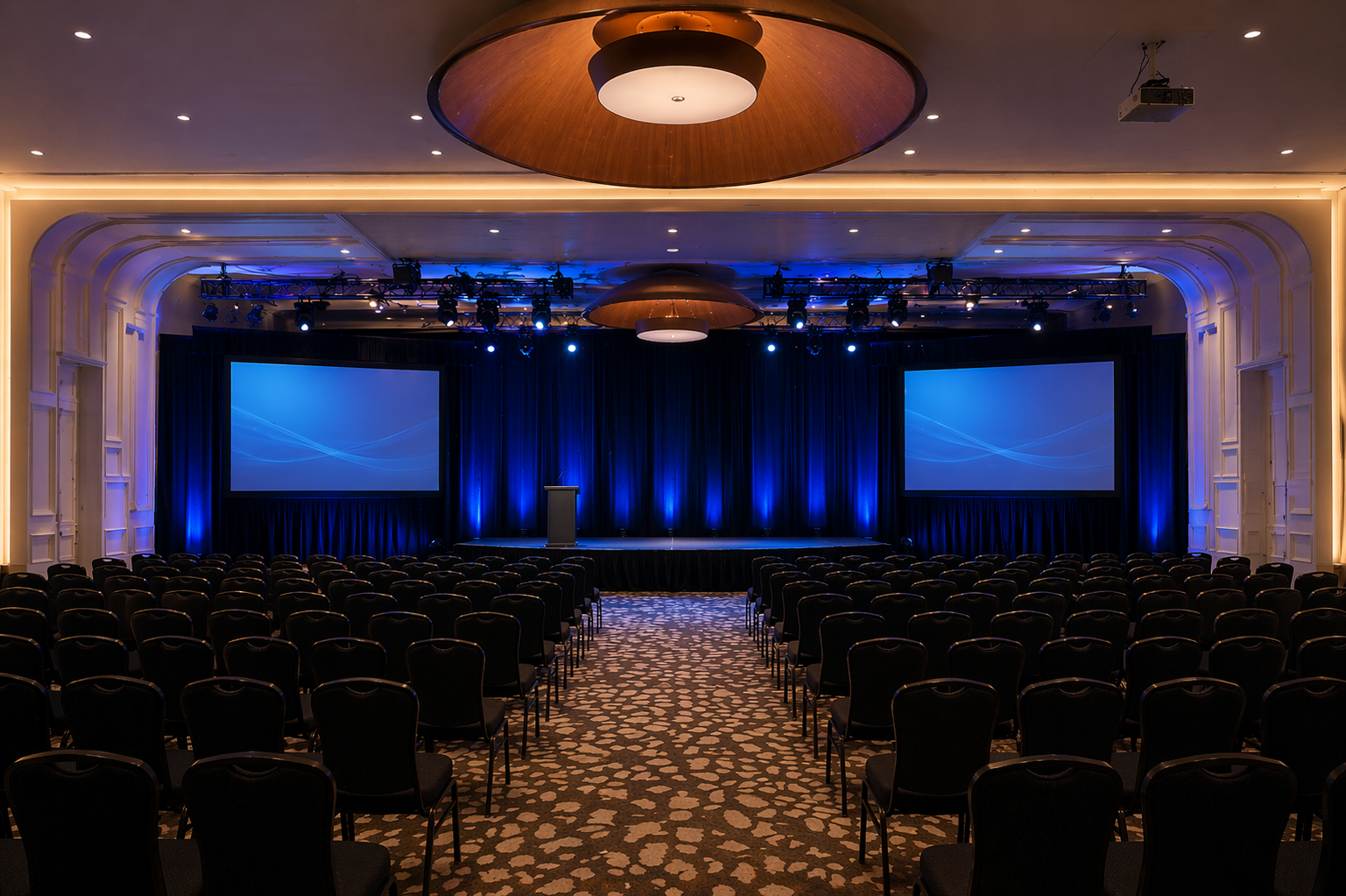
This is a keynote mockup created using AI for the Signia Dream Ballroom. It’s not about final design. It’s about creating a clear, visual direction early so stakeholders, vendors, and internal teams are aligned before anything is built.
While visualization is the most obvious shift, the impact goes beyond just creative direction. AI can also support smarter planning by helping identify potential red flags early, from overcrowded room layouts to gaps in staffing or safety considerations. It gives planners an additional layer of awareness, allowing them to pressure test decisions before they become real problems.
But the real advantage isn’t AI itself.
It’s clarity.
And clarity is what ultimately drives better ROX.
Because when your vision is clearly understood from the start, the experience is more intentional. The environment aligns with the behaviors you’re trying to drive. Attendees move through the space the way you designed them to. They engage where you want them to engage. They remember what you want them to remember.
That doesn’t happen by accident. It happens when strategy, design, and execution are aligned before the event even begins.
AI just accelerates that alignment.
The planners who will stand out are the ones who use it to remove ambiguity, not create more noise. The ones who understand that better visuals aren’t just about aesthetics. They’re about driving the right behaviors, creating more meaningful interactions, and ultimately delivering experiences that perform.
Because when people can see the experience before it’s built, everything changes.
You’re not just planning events.
You’re engineering outcomes.
